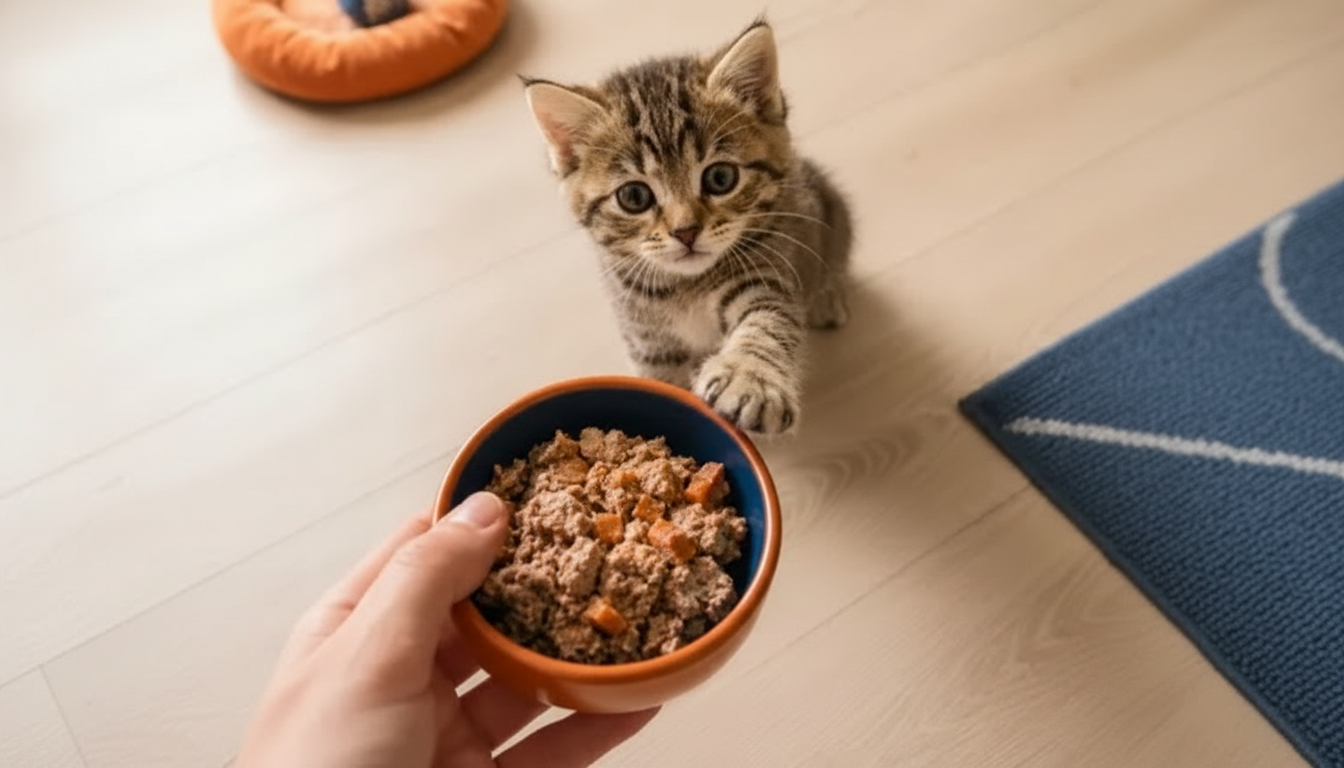
A new kitten’s appetite can feel nonstop, but the goal is simple: steady growth, comfortable digestion, and calm, consistent mealtimes. The first week is about keeping food predictable, watching your kitten’s stools and energy, and making changes slowly. Below is a practical plan for what to feed, how often to feed it, and how to switch foods without stomach upset as your kitten settles in.
Kittens aren’t just “small cats”—they’re growing fast and need a diet built for growth. Start by choosing a food labeled “complete and balanced” for kittens or for “growth” (many “all life stages” foods also qualify). This labeling matters because it signals the formula meets established nutrient standards for development.
For deeper background on nutrition assessments, these veterinary resources are helpful: WSAVA Global Nutrition Guidelines and the AAHA Nutritional Assessment Guidelines.
Day 1 through Day 3 is not the time to “upgrade” foods, even if you bought a premium brand. If your kitten came from a shelter, breeder, or foster home, begin with the same food they were already eating. Stress alone can soften stools; changing food at the same time makes it much harder to pinpoint what’s causing tummy trouble.
Kittens do best with smaller, more frequent meals because their stomachs are small and their energy needs are high. A predictable schedule also helps reduce frantic begging and tends to support more consistent litter-box habits.
| Kitten age | Meals per day | Notes |
|---|---|---|
| 4–8 weeks | 4–6 | Often weaning; soft/wet food helps. Offer small, frequent meals. |
| 8–12 weeks | 4 | Most kittens thrive on a consistent 4-meal routine. |
| 3–6 months | 3 | Gradually reduce to 3 meals; maintain kitten-formulated food. |
| 6–12 months | 2 | Most can move toward 2 meals; continue kitten diet until your vet advises adult food. |
There’s no single “right” format—what matters most is that the diet is complete and balanced for kittens, and that you can feed it consistently.
For general feeding principles and practical tips, Cornell’s overview is a useful reference: Cornell Feline Health Center: Feeding Cats.
A structured plan can take the guesswork out of balancing wet vs. dry, setting portions, and timing a safe transition—especially during the first week. If you want a clear, printable approach, Feeding Your New Kitten Right: Essential Kitten Nutrition eBook is designed around age-based schedules, common tummy troubleshooting, and practical checklists for calm mealtimes.
And because feeding issues sometimes overlap with minor emergencies (vomiting, dehydration concerns, unexpected reactions), keeping a quick reference nearby helps: Must-Know Pet First-Aid Cheat Sheet.
Very young kittens often do best with 4–6 small meals daily, then most move to 4 meals (8–12 weeks), 3 meals (3–6 months), and 2 meals by later kittenhood. Keep timing consistent and weigh your kitten weekly to confirm steady growth.
Either can work as long as the food is complete and balanced for growth. Wet food supports hydration and is highly palatable, while dry food is convenient and easy to portion; many kittens do best with a measured combination.
Mix foods gradually over 7–10 days (75/25, then 50/50, then 25/75, then 100% new), pausing for a few days if stool loosens. Contact a veterinarian if vomiting or diarrhea persists, if there’s blood in the stool, if your kitten becomes lethargic, or if dehydration is suspected.












Leave a comment